AI-powered commerce
One product link in. A Shopify storefront out.
I joined Krafted AI as the founding AI engineer and built the product from scratch - from product strategy and system architecture to the Shopify app, AI workflows, infrastructure, and production deployment. It grew from zero to $18,000 MRR with 530 active users.
Commercial and usage figures are from Krafted AI's internal product analytics for the approved reporting period.
Technology
Make launching a store feel like one action
Krafted AI turns a product link into a branded, publish-ready Shopify storefront. Behind that single action is a workflow that extracts inconsistent marketplace data, understands the product, generates copy and images, composes the page, applies plan entitlements, and publishes into Shopify.
The hard problem was not making a model produce something plausible. It was making the complete system predictable enough for merchants to trust with a live store.
Built from scratch, end to end
I was hired as the founding AI engineer and owned product strategy, architecture, implementation, and deployment. This was a greenfield build, not an existing application I was brought in to adjust.
I shaped the launch scope, designed the domain model and generation workflow, built the embedded Shopify experience and backend services, integrated the AI and commerce systems, and took the product into production.
Product evidence
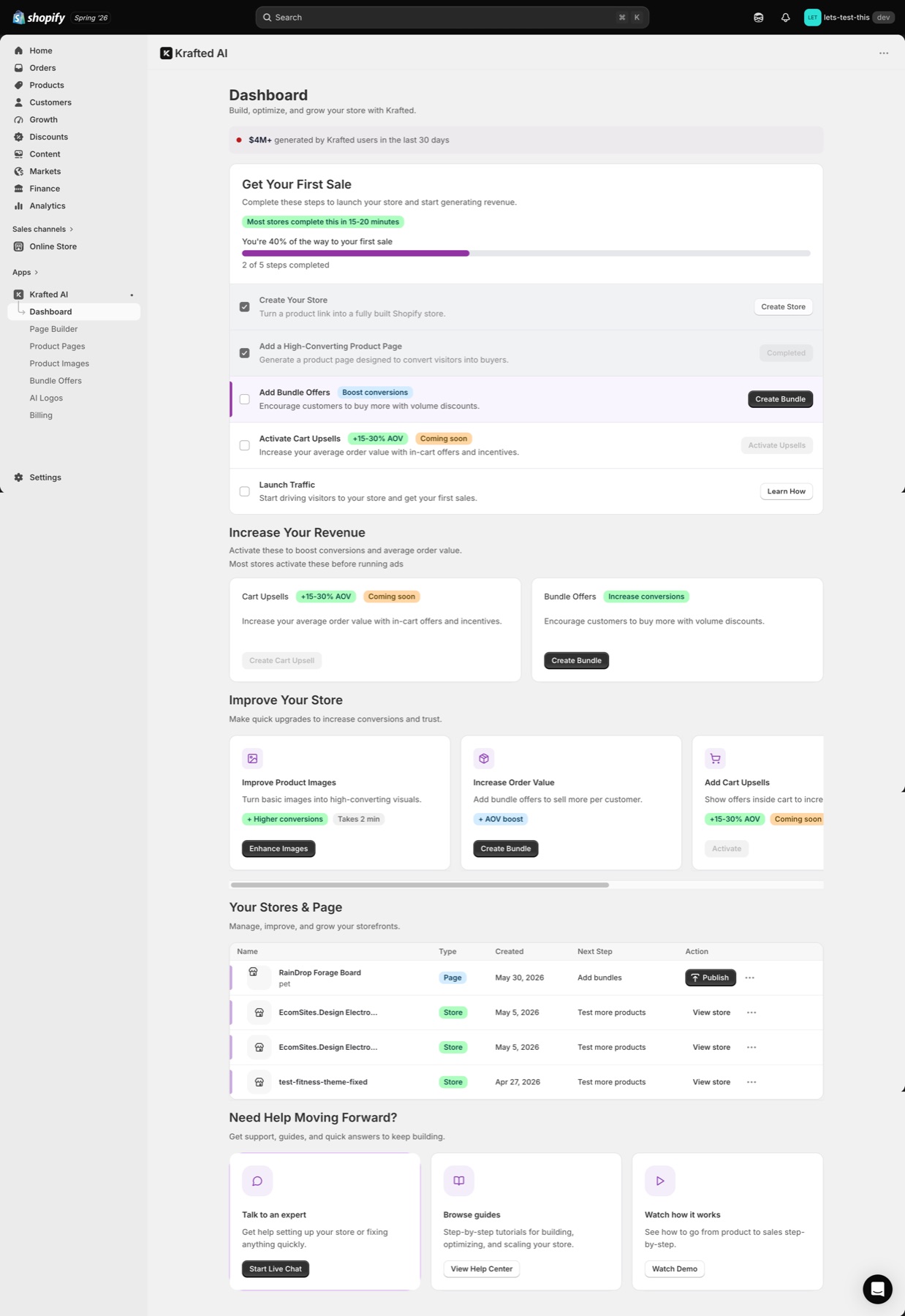
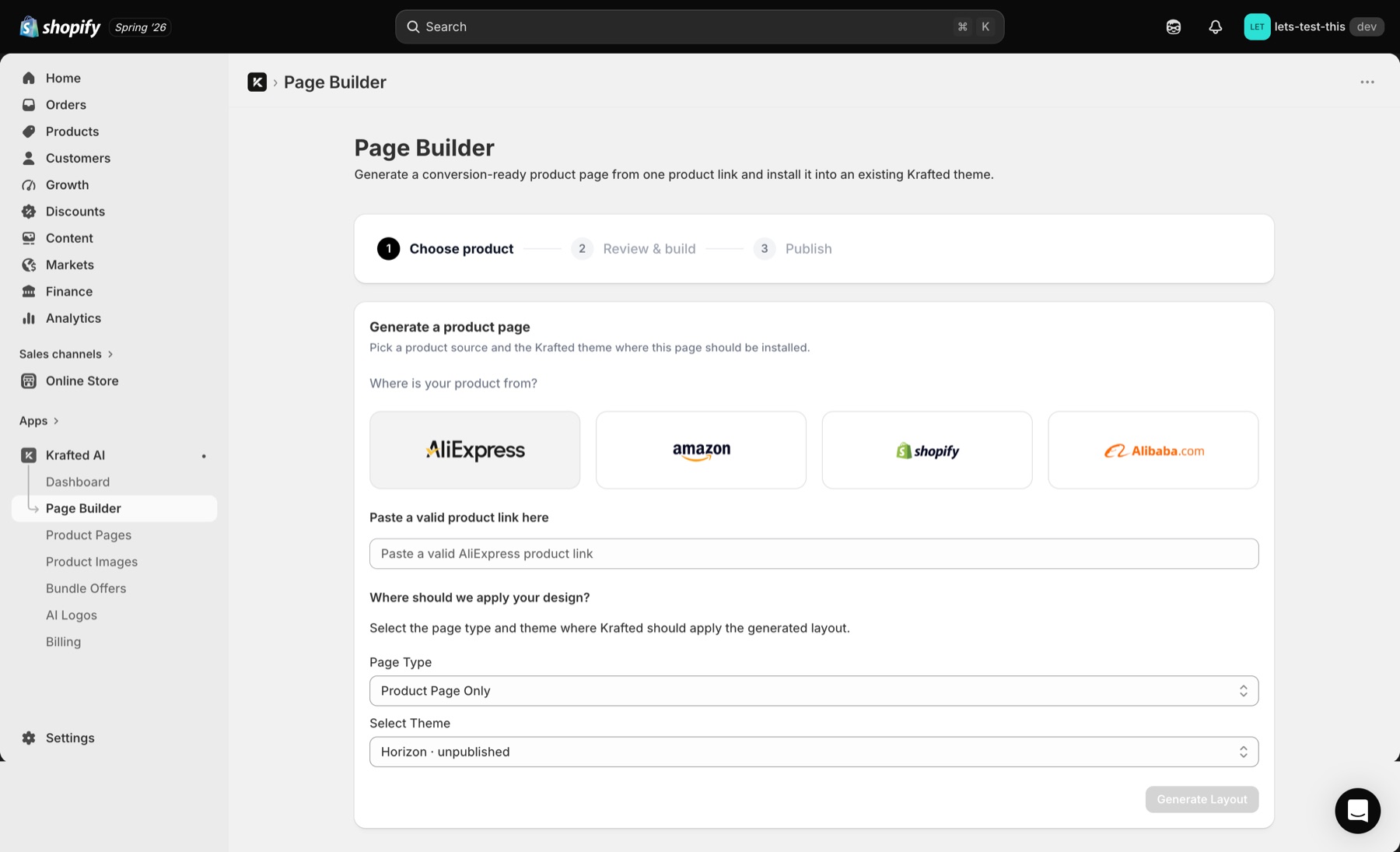
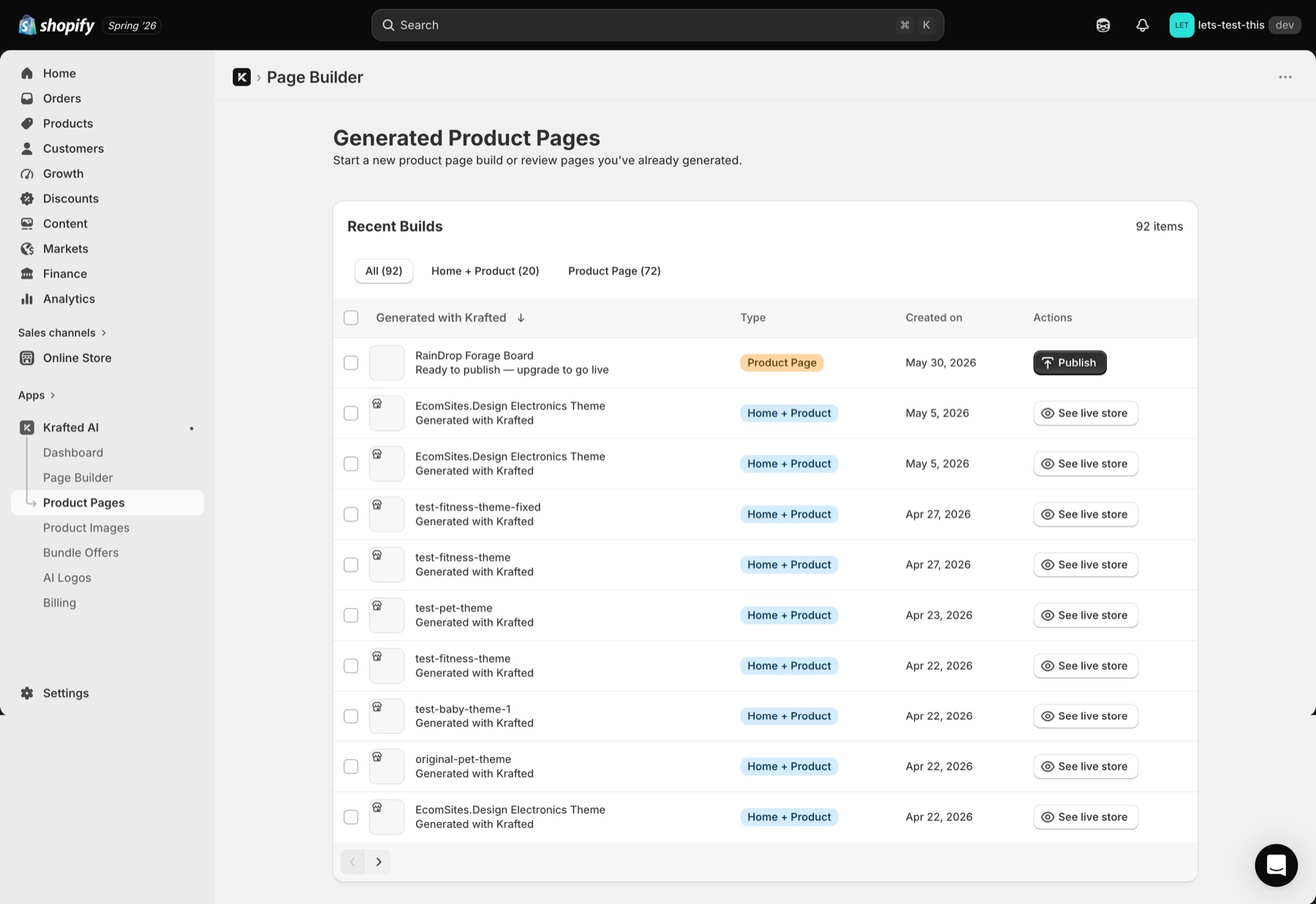
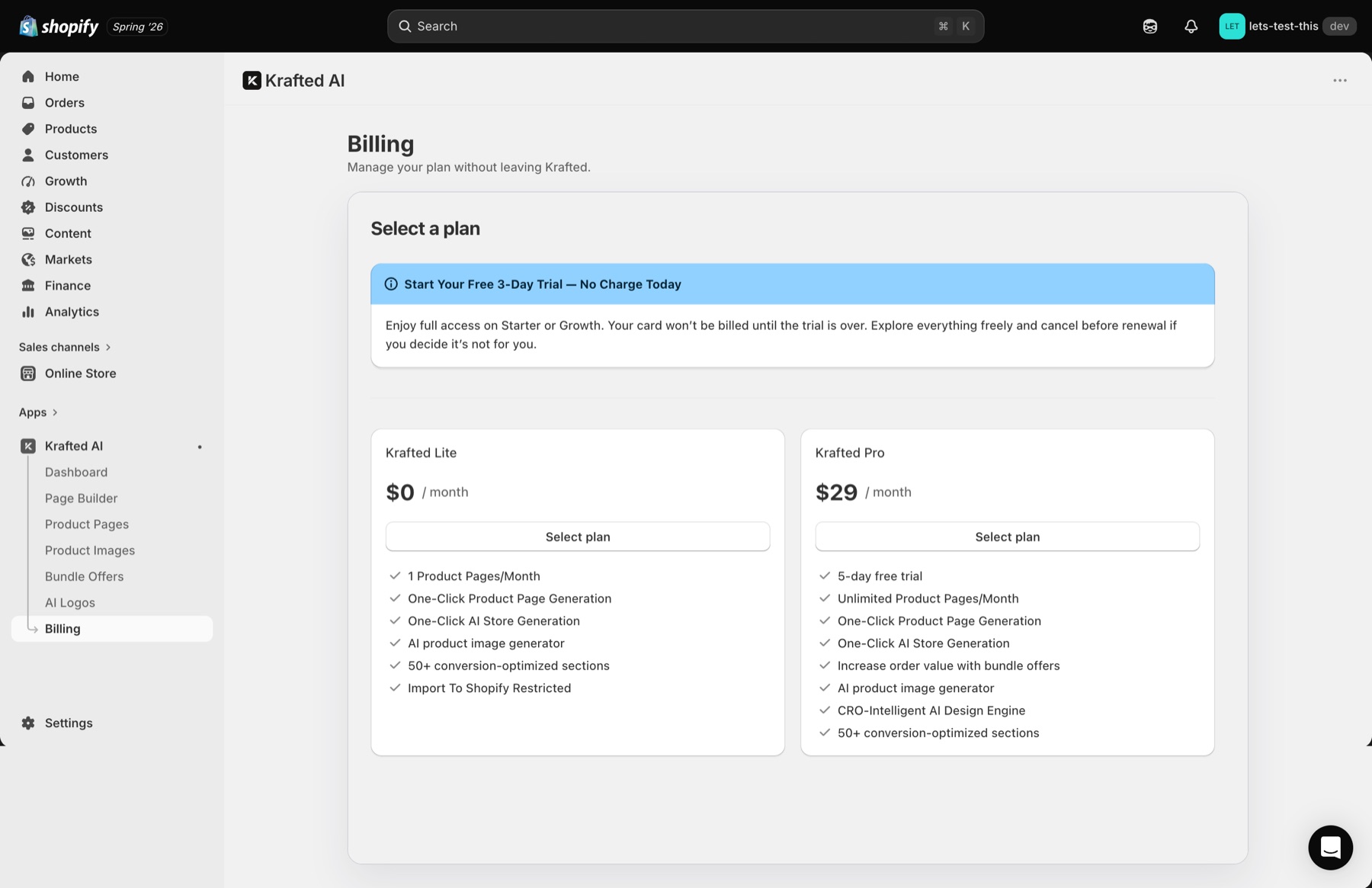
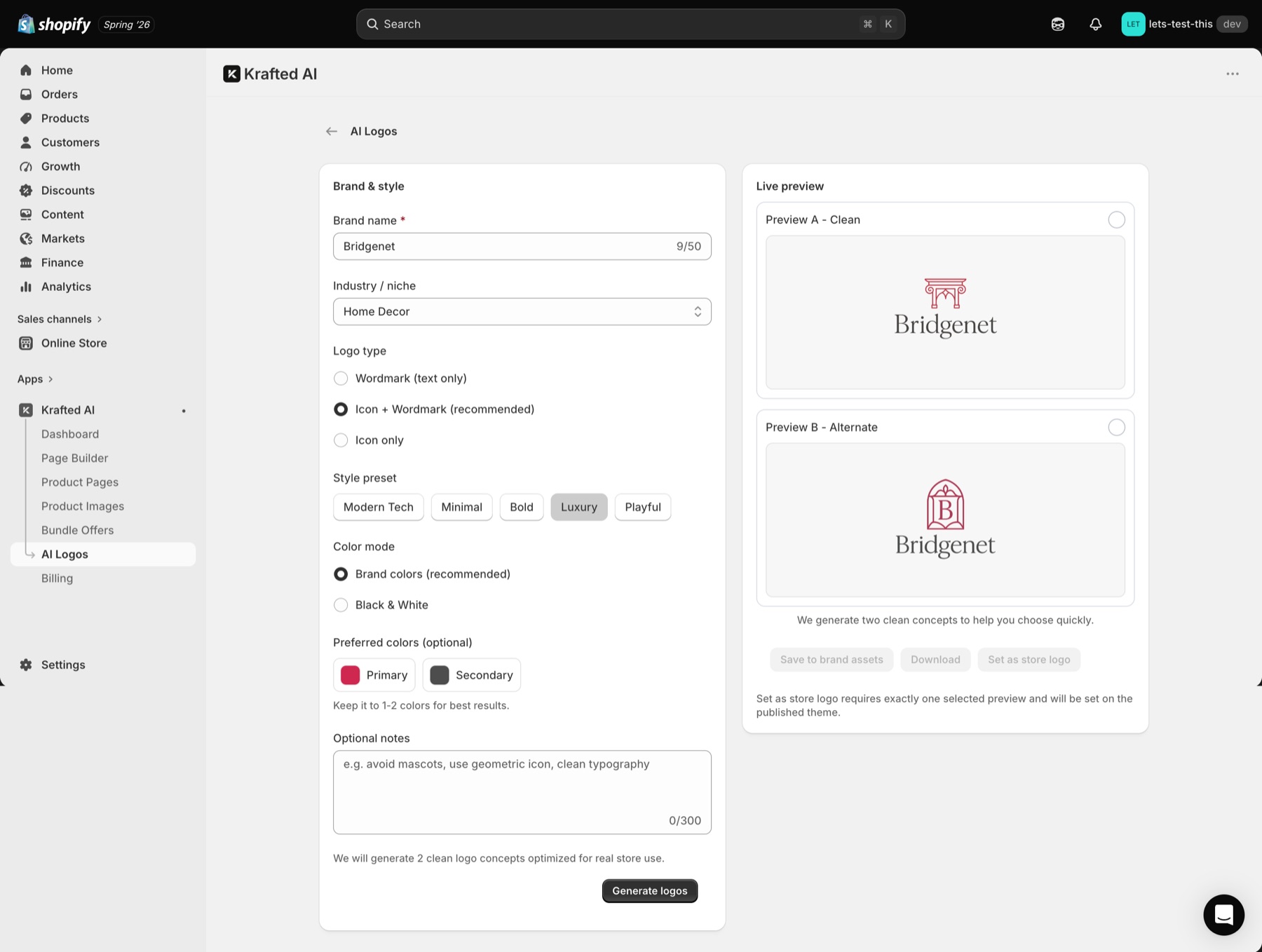
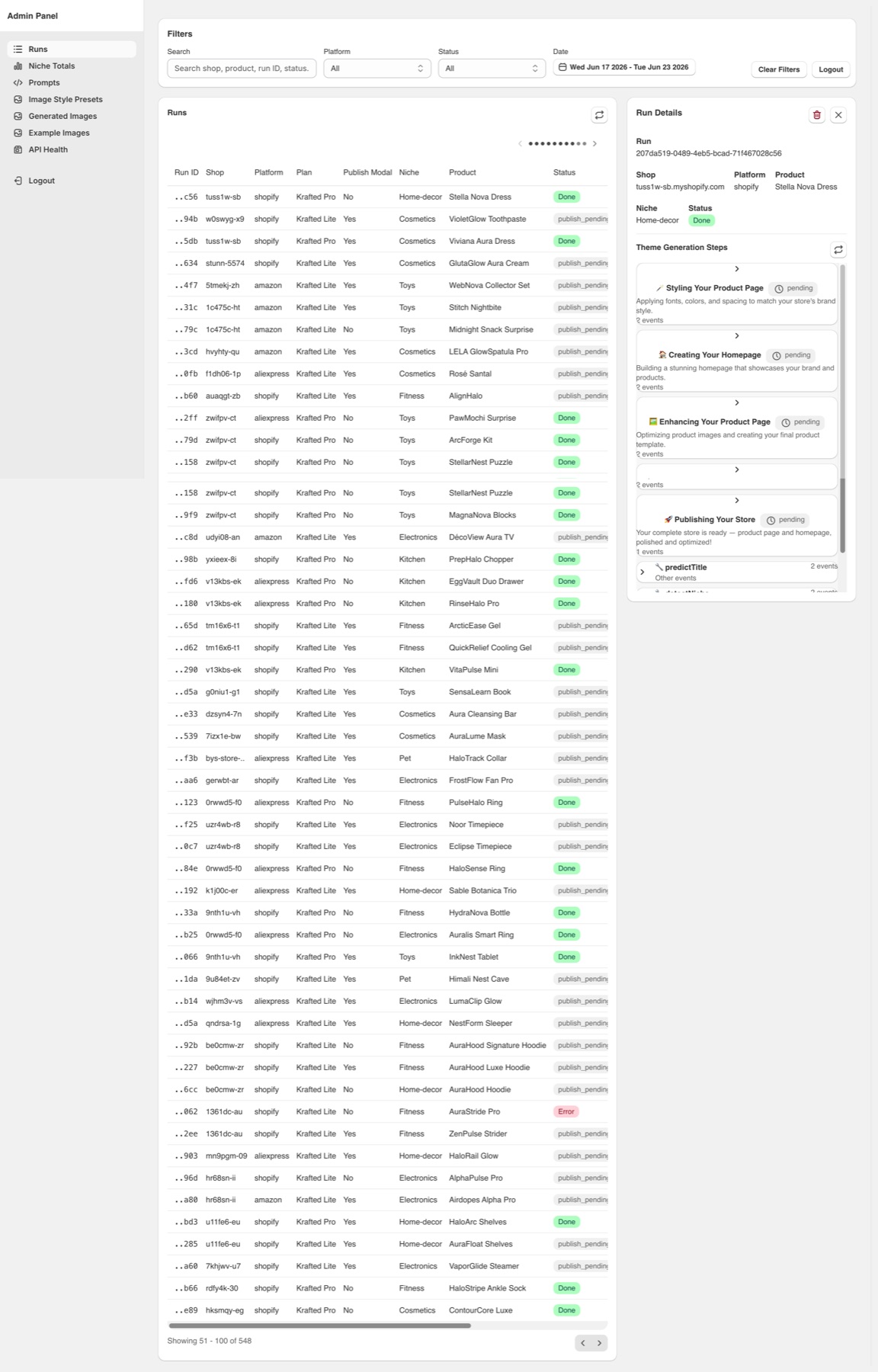
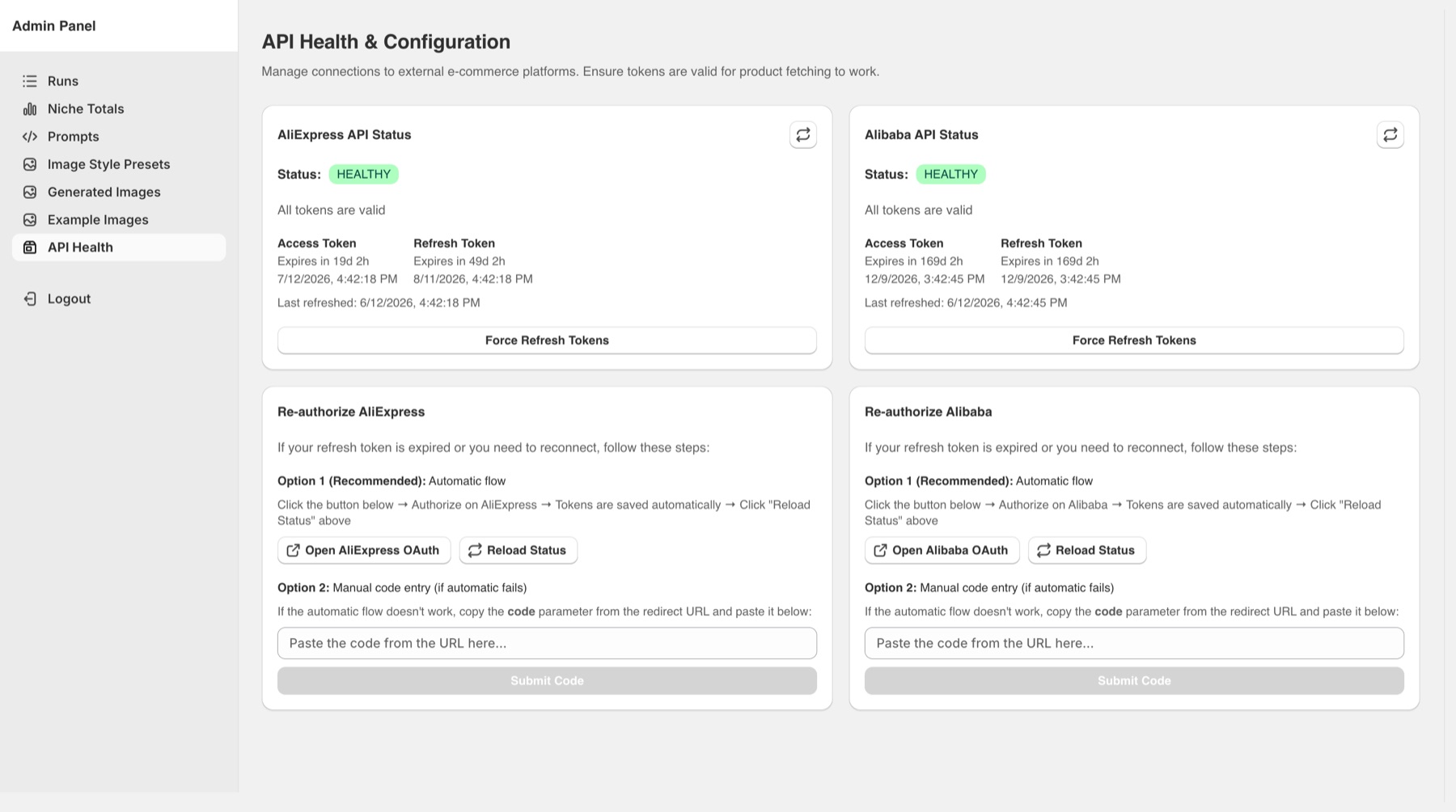
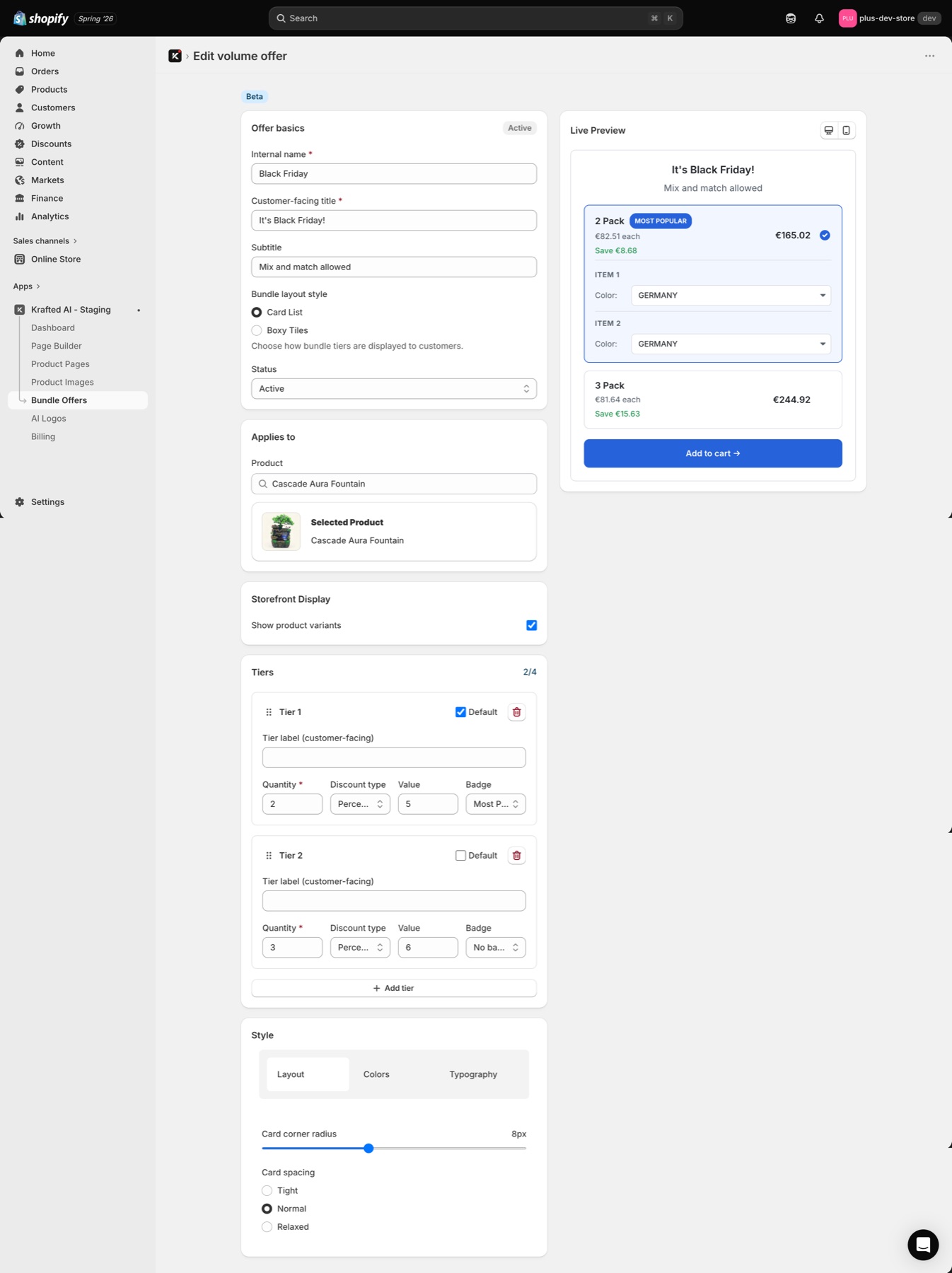
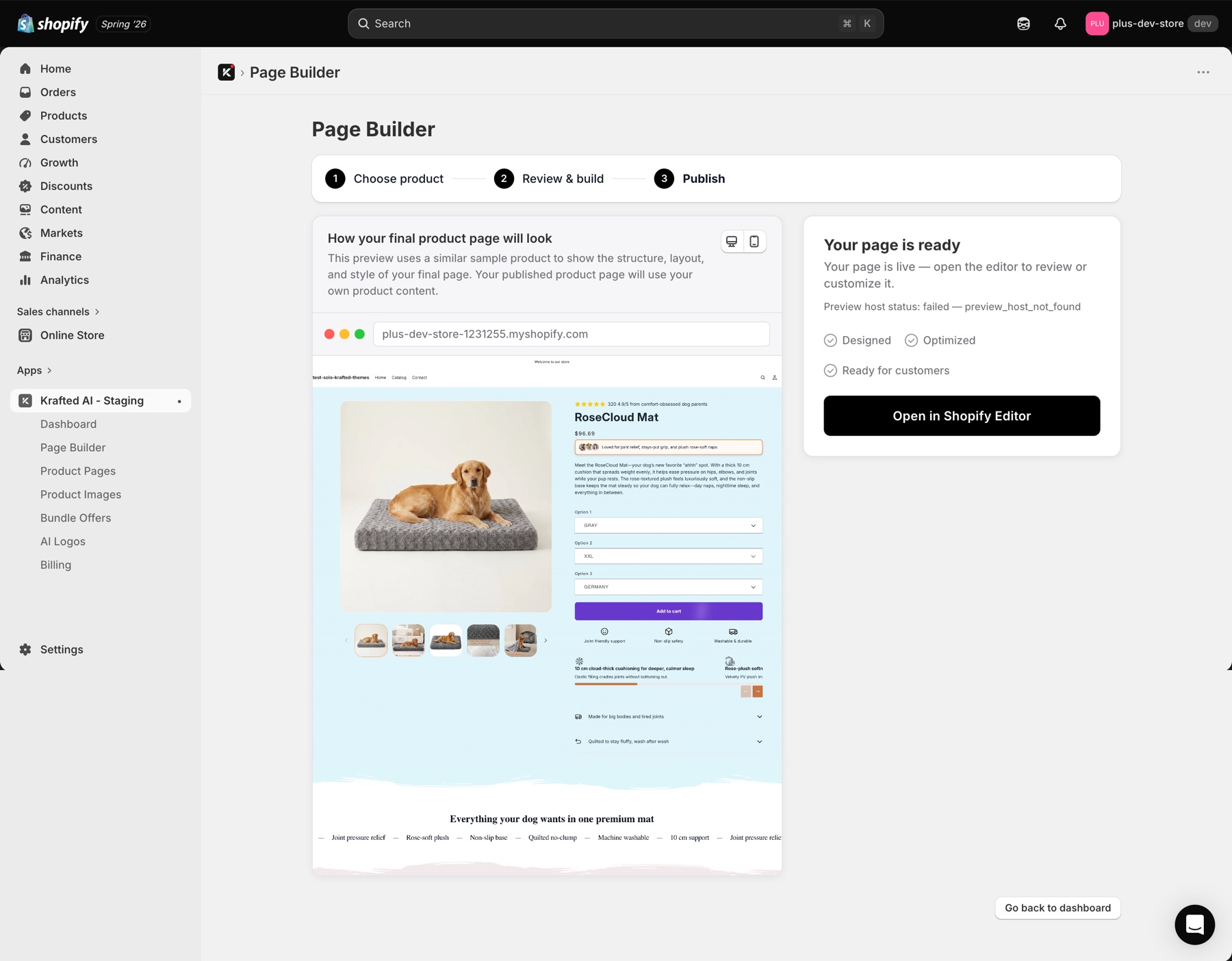
From product link to published page
The complete workflow, from entering a product through generation, merchandising, administration, and the published storefront.
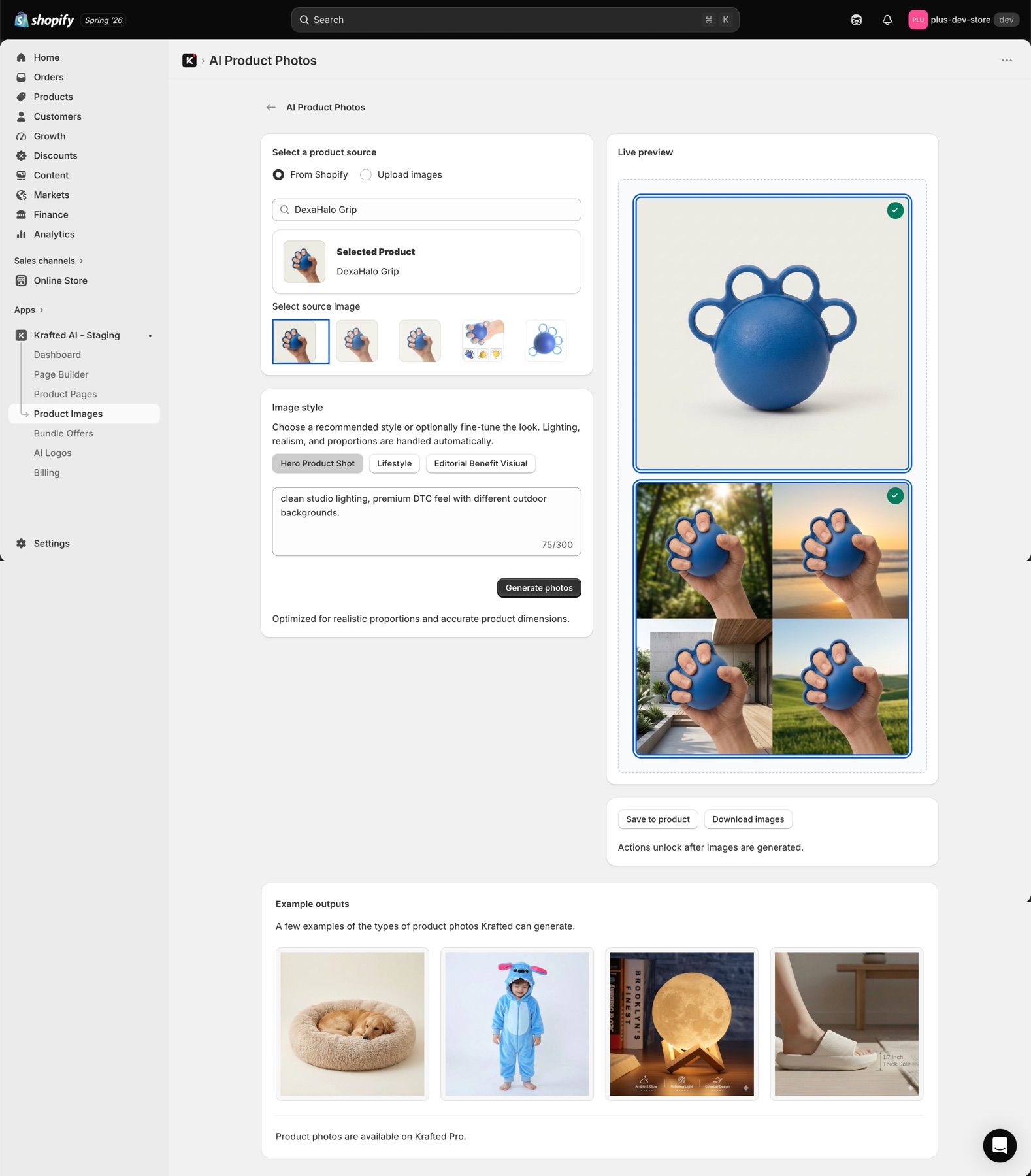
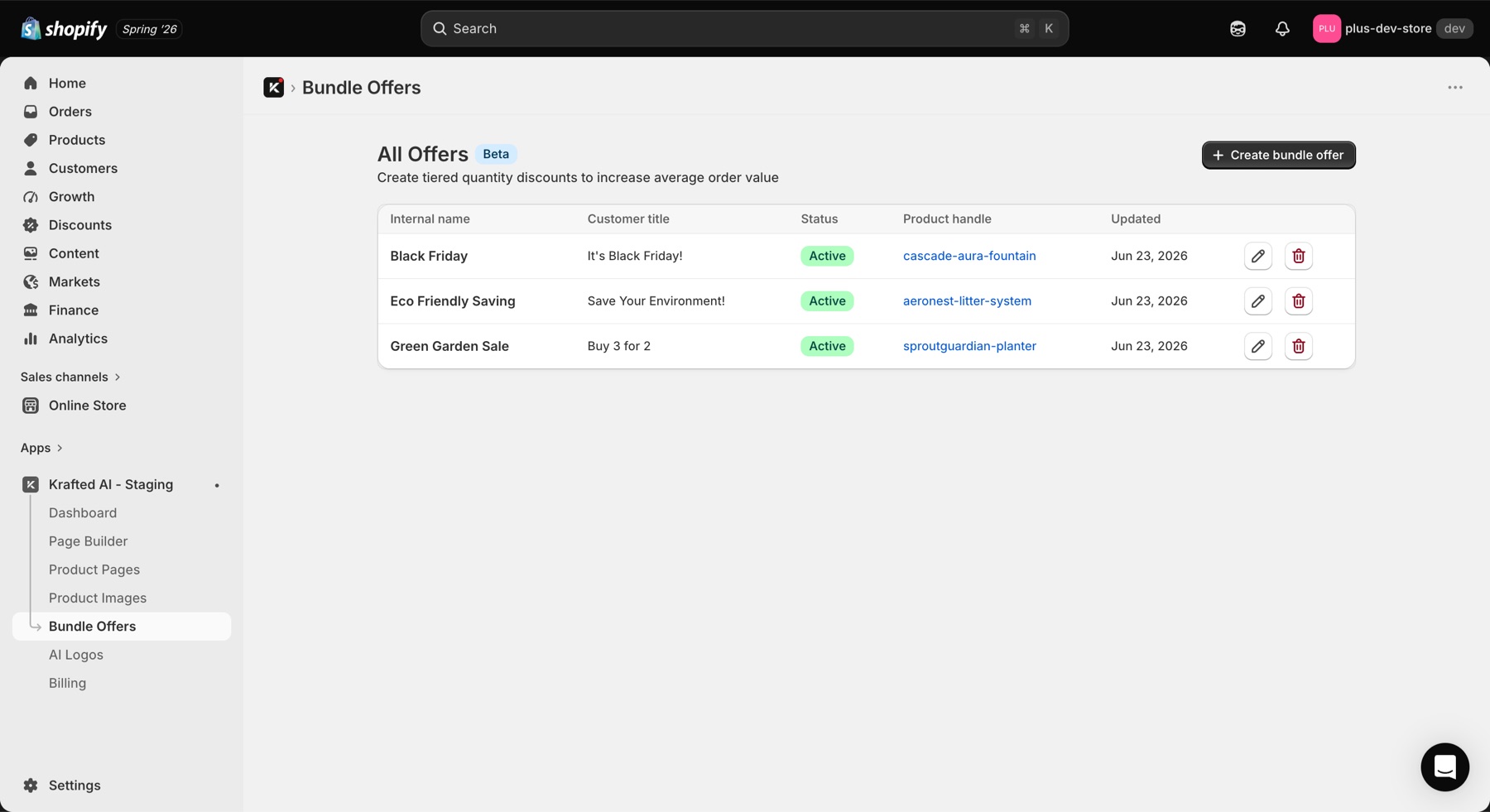
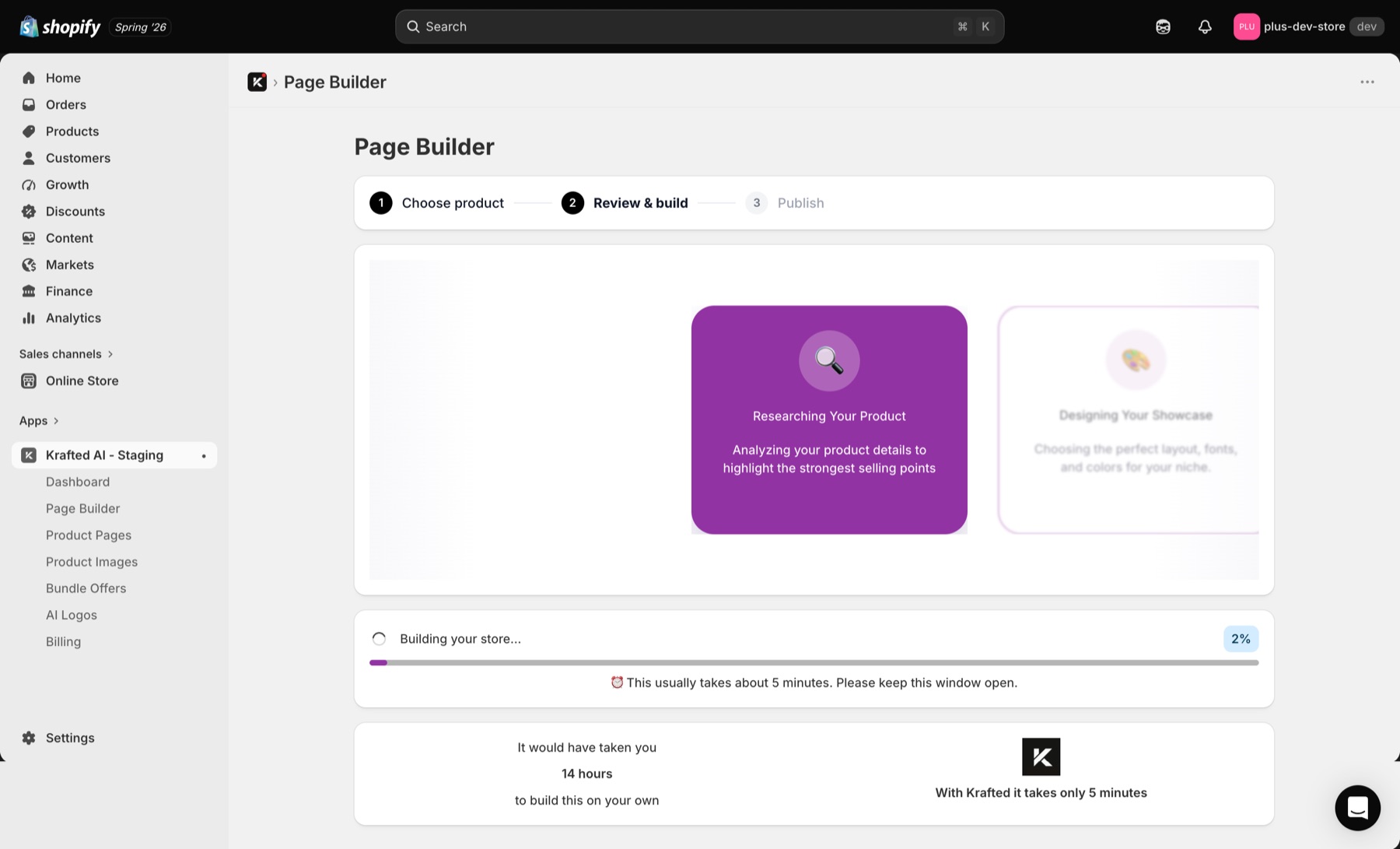
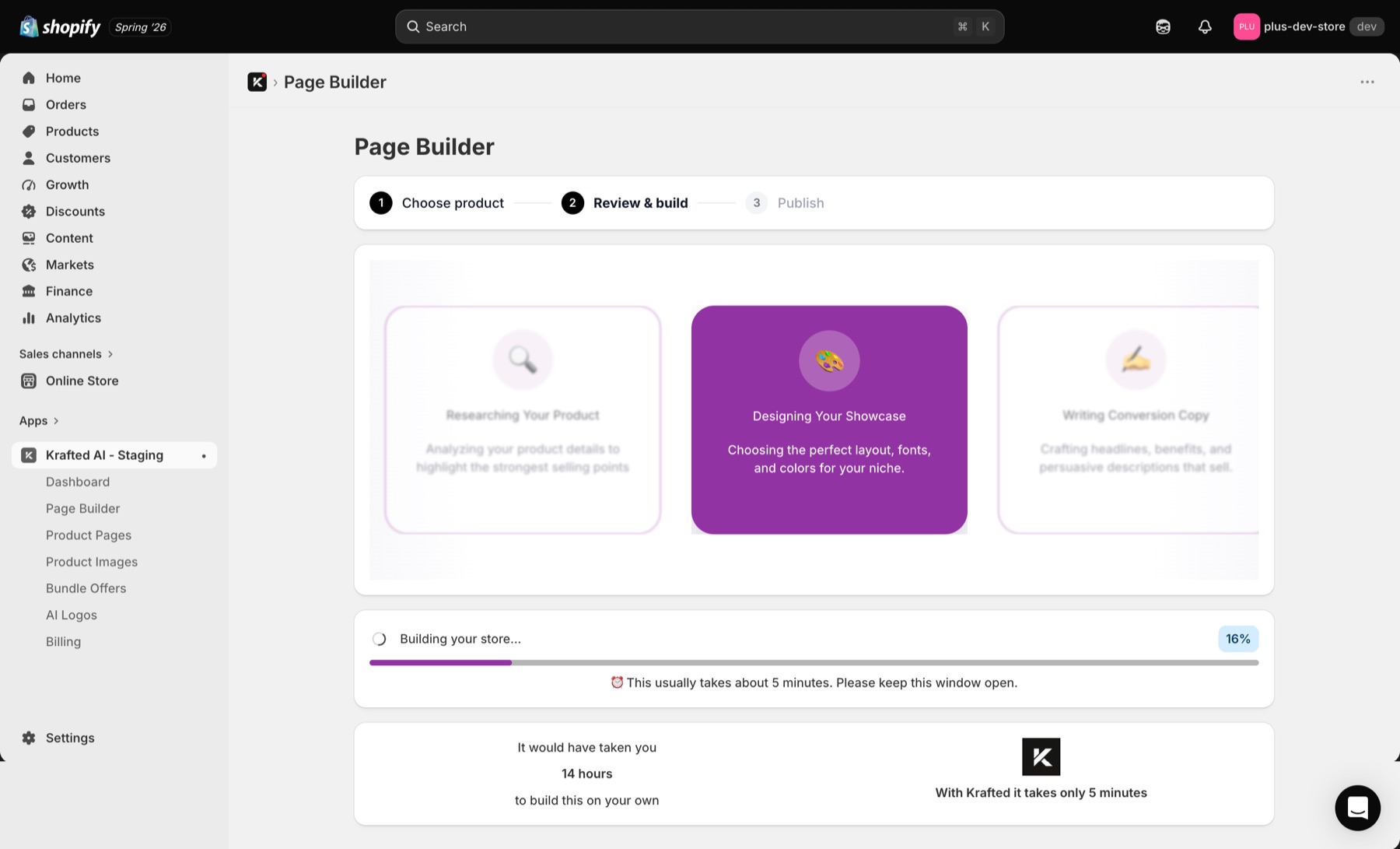
Architecture
Where model output stops and engineering starts
The system uses AI where judgment adds value and deterministic software wherever the product must make a verifiable promise.
- 01
Constraint
One merchant action had to coordinate marketplace data, AI providers, media generation, billing, and Shopify APIs.
Decision
Put a canonical product model between source data and generation, then isolate orchestration from capability-specific services.
Impact
External sources and model providers can change without pushing their data shapes and failure modes through the entire application.
- 02
Constraint
Model output can sound convincing while still being incomplete, malformed, or wrong for the merchant's store.
Decision
Use models for product classification, copy, and creative choices, but keep schemas, entitlements, asset checks, and commerce state in deterministic code.
Impact
AI remains replaceable and bounded, and every result is validated before it can affect a live Shopify store.
- 03
Constraint
Shopify writes and third-party calls can partially succeed or become consistent after the initial response.
Decision
Use idempotent writes, explicit failure states, and read-back checks for every critical publishing operation.
Impact
The application reports success only after the intended store state is verified, and a retry cannot duplicate completed work.
Outcome
From greenfield build to a production business
- Built and launched the production Shopify app from scratch in three months.
- Scaled the product from zero to $18,000 MRR with 530 active users.
- Delivered the full path from a product link through data extraction, AI-assisted positioning, copy and image generation, page composition, and Shopify publishing.
- Established clean boundaries for adding product sources, model providers, and merchandising capabilities without rewriting the core workflow.
Krafted AI worked because AI was treated as a capability, not the architecture. The durable product is the system around the models: clear domain boundaries, deterministic safeguards, explicit state, and a publishing path that never confuses a plausible result with a verified one.
Abrar
Start a project
Need a Shopify app built with this level of ownership?
Tell me what the product needs to achieve. I can help shape the strategy, architecture, build, and path to production.
Discuss your Shopify app